The Host’s Guide to Entertaining Without the Financial Hangover
The fastest way to kill the joy of bringing people together is the slow-creeping panic of watching your grocery receipt print out past your knees. Somewhere between casual neighborhood get-togethers and algorithmic perfection, entertaining turned into an arms race of customized party favors, organic charcuterie architecture, and color-matched balloon garlands.
Hosting should feel like sharing your home and hospitality, not underwriting a small Broadway production. Removing the financial anxiety from party planning doesn’t require serving tap water and pretzels in plastic bowls—it simply requires ditching performative spending in favor of high-impact hospitality.
1. Dethrone the “Pinterest Tax” Before You Shop
Most party overspending is emotional, not logistical. It stems from the subconscious worry that guests will judge your effort based on your aesthetic output.
Human memory simply does not catalog parties that way. Six months from now, not a single guest will recall whether you used linen-feel disposable hand towels or the standard paper roll. What they will remember is the lighting, the music, whether they felt welcomed the moment they walked in, and whether you—the host—were relaxed enough to actually talk to them.
Before building a shopping list, define your Anchor Emotion:
- Do you want the night to feel lively and energetic? Invest in a great playlist, dim lighting, and easy finger foods.
- Do you want it cozy and intimate? Focus on a warm one-pot meal and comfortable seating.
If a potential purchase doesn’t directly support that emotional core, strike it from the list.
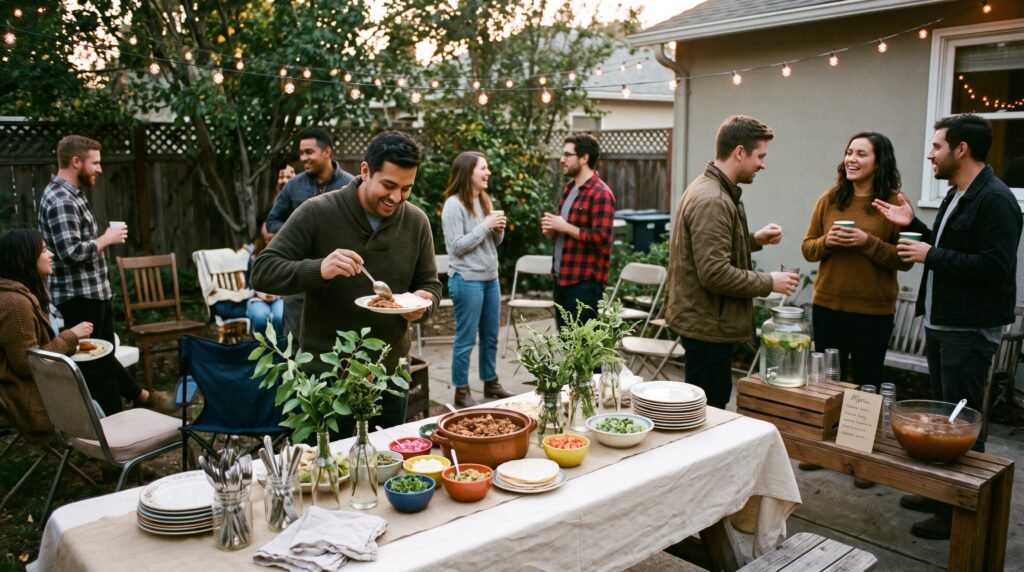
2. Implement the “Hero & Crowd” Menu Strategy
Food and alcohol represent 70% of a party budget. The most expensive mistake hosts make is offering too much variety, which forces you to buy dozens of unique ingredients you will never finish.
Instead, build your menu around one “hero” element supported by low-cost crowd-pleasers:
| Category | The “Hero” (Spend Here) | The “Crowd” (Save Here) |
| Main Dish | Slow-braised carnitas pork shoulder or a scratch-made signature pasta | Bulk warm tortillas, homemade pickled red onions, cilantro rice, and black beans |
| Beverages | One punch-bowl signature cocktail (e.g., a spiced cider bourbon fizz or citrus sangria) | Self-serve dispensers of filtered water infused with mint/cucumber, and sparkling water with citrus wedges |
| Appetizers | A single stellar baked brie with honey and walnuts | Warm seasoned popcorn, toasted pita wedges, and house-made roasted garlic hummus |
| Dessert | A warm batch of bakery-style sea salt chocolate chip cookies straight from the oven | Vanilla bean ice cream scooped alongside fresh seasonal fruit |
A signature batch cocktail dramatically cuts costs compared to setting up a full bar, controls alcohol pacing, and feels distinctly intentional rather than frugal.
3. Leverage Interactive Food Stations
High-end catering often leans on interactive assembly because it feels luxurious, but it is secretly the most economical way to feed a group. People love customizing their plates, and the bulk of the plate is filled with inexpensive base carbohydrates.
- The Loaded Baked Potato / Sweet Potato Bar: A sack of russet potatoes, slow-baked until crisp, surrounded by scallions, sour cream, crispy bacon bits, sharp cheddar, chili, and sautéed greens.
- The Gourmet Taco / Grain Bowl: A protein base flanked by charred corn, black beans, cabbage slaw, limes, and salsas.
- The Street-Noodle Station: Noodles (ramen or soba) served with a rich, savory broth and small dishes of shredded carrots, jammy eggs, chili crisp, cilantro, and scallions.
Guests leave full and delighted by the agency of building their own dinner, while you avoid the cost of portioned, individual entrées.
4. Curate Atmosphere with What You Already Own
Atmosphere creates 90% of a party’s perceived luxury, and light is practically free. You do not need expensive floral arrangements or rented decor to transform a living room.
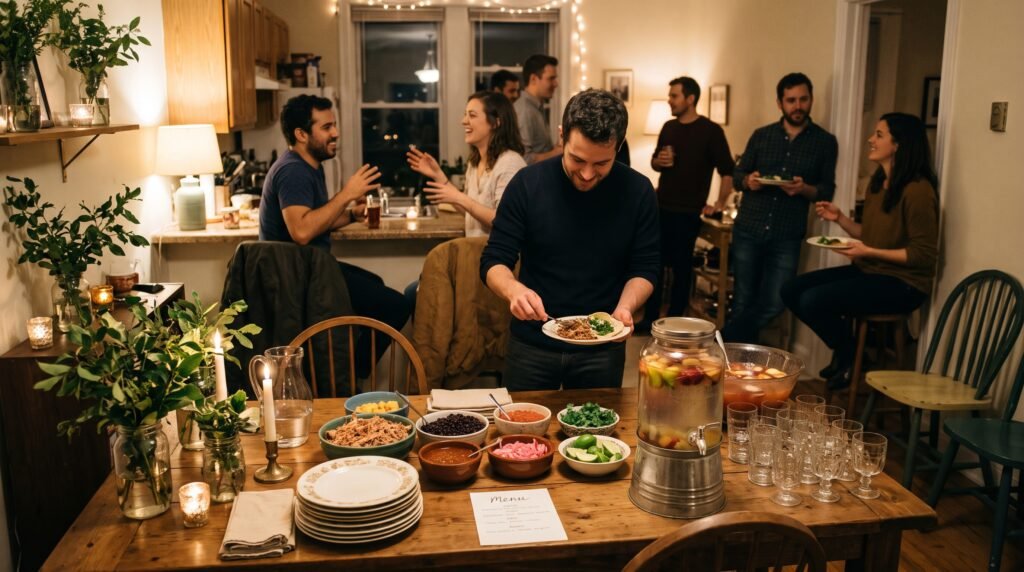
- Kill the Overhead Lights: Turn off overhead lighting entirely. Rely on lamps placed at varying heights, candlelight, or warm string lights tucked behind plants and bookshelves.
- Forage and Cluster: Skip commercial florists. Clip greenery, olive branches, or textured leafy stems from your yard and group them in odd numbers using empty glass bottles, jars, or simple pitchers.
- Rethink Paper Goods: If you don’t have enough matching plates, borrow from a friend or hit a local thrift shop for mismatched vintage china plates (often $0.50 to $1.00 each), which can be washed and reused indefinitely. Mismatched real plates instantly elevate an evening far beyond even the priciest disposable alternative.
- Use Strategic Digital Printables: Instead of buying manufactured decorative signage, print an elegant menu card, drink recipe card, or personalized playlist placard on textured cardstock. High design costs pennies when run through a home printer.
5. Direct Guest Generosity with Precision
When guests ask, “What can I bring?”, our default polite impulse is often to say, “Nothing, just bring yourself!”
This is a double failure: it denies the guest their desire to participate, and it puts the entire financial weight back on your wallet. However, saying “bring whatever you want” leads to four opened bags of tortilla chips and six bottles of cooking-grade wine you’ll never drink.
Instead, direct their generosity toward specific, high-cost friction points:
- “If you’d like to bring something, a bag of ice and a 12-pack of flavored sparkling water would take a massive weight off my shoulders!”
- “A bottle of your favorite wine or cider to share would be fantastic.”
- “We’ve got the main dish covered, but we’d love a carton of berries or a rustic baguette if you’re swinging by a bakery.”
Guests appreciate concrete tasks. It makes them feel like active contributors to the celebration rather than consumers being waited on.
6. The 15% Contingency Buffer
Decide on an absolute hard dollar ceiling before you write a single receipt. Then, immediately subtract 15% from that total.
If your total budget is $150, plan your menu and supplies around $127. That missing $23 will inevitably be swallowed by the last-minute run for forgotten lemons, an extra bag of ice, or an ingredient emergency. By baking the contingency directly into your planning math, you protect yourself from the frantic checkout line overages that trigger post-party regret.
Hosting is fundamentally about generosity of spirit, not conspicuous consumption. When you strip away the expensive posturing, you make room for what people are actually starving for: connection, comfort, and an unhurried host who has time to sit down and enjoy their own table.
Here is a financial-focused checklist designed to keep your entertaining costs in check, ensuring you don’t spend more than you are comfortable with or get caught off guard by last-minute expenses.

The “Stress-Free” Party Financial Checklist
Phase 1: Establishing the Budget (Before Buying Anything)
- [ ] Calculate Your Hard Ceiling: Determine the absolute maximum amount of money you can spend without feeling pinch or regret ($________).
- [ ] Subtract 15% for the “Oops Buffer”: Reduce your ceiling by 15% to find your true target budget ($________). Hold this 15% back for those inevitable last-minute grocery runs for ice, lemons, or a forgotten ingredient.
- [ ] Assess the “Pinterest Tax”: Review your ideas and strike out at least three “performative” spend items that don’t change how guests actually feel (e.g., matching themed cocktail napkins, expensive party favors, custom decorations, or specialized signage).
- [ ] Identify the One “Hero” Food: Focus your main spending on one crowd-pleasing, high-impact item (like a slow-cooked pork shoulder, batch of carnitas, or handmade pasta dish).
- [ ] Map the “Crowd” Sides: Supplement your hero item with inexpensive filler bulk ingredients (like rice, beans, potatoes, tortillas, popcorn, or bread).
Phase 2: Shopping Your Home & Circle First (Zero-Cost Prep)
- [ ] Audit Your Pantry & Freezer: List all grains, spices, oils, frozen foods, and canned goods you already own to see what can be built into your menu to avoid buy-new costs.
- [ ] Survey Your Serving Ware: Count your plates, glasses, and utensils.
- [ ] Source from Friends: If you don’t have enough plates or chairs, ask guests or a neighbor to borrow a stack or folding chairs instead of renting or buying disposable plastics.
- [ ] Forage Decor: Clip greenery, ivy, or leafy branches from your yard instead of purchasing floral arrangements.
- [ ] Shop the Thrift Store (If Needed): Need mismatched vintage glasses or plates? Budget a few dollars at a thrift shop instead of paying premium prices for bulk paper plates and plastic cups.
Phase 3: The “Crowdsourced” Offset
- [ ] Create Your “Guest Help” List: Have specific, budget-saving requests ready when guests ask, “What can I bring?”:
- The Ice & Soda Assignment: (Saves you $10–$15 and a frantic last-minute run).
- The Dessert/Side Bypass: (Saves you having to bake or buy sweet treats/appetizers).
- The Drink Contribution: (“BYO favorite six-pack or wine to share”).
- [ ] Prepare the Signature Batch Drink: Designate one batch drink (Punch, Sangria, or Spiced Cider with liquor on the side) instead of setting up a expensive, multi-option bar.
Phase 4: Smart Shopping Logistics (At the Store)
- [ ] Build a Tiered Grocery List: Split your list into “Non-Negotiables” and “If Budget Permits” so you can easily trim items at the store if your cart starts getting too expensive.
- [ ] Overlapping Ingredients Strategy: Simplify. Buy items that can pull double-duty (e.g., buying a big bundle of cilantro for both the tacos and the dip, or limes for both the batch cocktail and the tacos).
- [ ] Go Generic on Staples: Buy store brands for dry goods, canned mixers, spices, baking goods, and frozen items. Nobody will taste the difference in the final dishes.
- [ ] Avoid “Convenience Premium” Taxes: Skip pre-cut, pre-marinated, or individual-portion foods. Do the chopping, grating, and prepping yourself to shave 30–50% off those items.
- [ ] Exact Portion Shopping: Check your RSVP count and buy exact produce and bulk items needed, rather than over-purchasing out of fear.
Phase 5: Check-Out Check
- [ ] Watch the Subtotal: Use your phone’s calculator or check your shopping list’s estimations before heading to the register.
- [ ] Keep Receipts: File your receipts immediately. It allows you to see where you overspent so you can budget better next time.
Key Takeaways
- Lead with an Anchor Emotion: Define the feeling you want to create—cozy, lively, or relaxed—before spending a dime. If a purchase doesn’t directly support that emotional core, leave it on the shelf.
- Rely on the “Hero & Crowd” Strategy: Spend your food budget on one standout centerpiece dish, then round out the spread with inexpensive, crowd-pleasing bulk staples and interactive stations like a taco or baked potato bar.
- Batch the Bar: Skip the fully stocked bar cart. A single signature batch cocktail or sangria paired with self-serve infused water provides a curated experience at a fraction of the cost.
- Source Atmosphere at Home: Dim overhead fixtures, gather mismatched vintage plates, and forage branches from the yard. True ambiance comes from warm, scattered lighting and comfortable seating, not purchased decor.
- Delegate Real Friction Points: When guests ask how to help, give them specific, budget-saving items—like bagged ice, a case of sparkling water, or bakery bread—rather than politely declining.
- Protect Yourself with a 15% Buffer: Plan your expenses around 85% of your target ceiling. Reserving the remaining 15% absorbs forgotten ingredients and last-minute runs without triggering post-party regret.
Conclusion
Entertaining is fundamentally an act of connection, not a performance of perfection. When you strip away the pressure of algorithmic aesthetics and commercially driven expectations, you make room for genuine hospitality. Guests don’t gather around your table to audit your receipts, they show up to share a meal, laugh, and spend unhurried time in your company. By setting practical boundaries and prioritizing atmosphere over extravagance, you protect your bank account and give yourself the greatest hosting asset of all: the presence of mind to actually enjoy your own party.