Make a chef theme party fun without making it complicated
A memorable cooking celebration doesn’t require a professional kitchen or a complicated menu. For a chef theme party that works for a child’s birthday or an adult gathering, choose a few hands-on activities, food you can prepare ahead, and decorations that fit your space and available time.
Start by setting a manageable expectation: guests can make or decorate one thing, enjoy ready-to-serve food, and take home a small reminder of the day. A chef theme party becomes much easier to host when you prepare stations and ingredients in advance, then give guests a limited number of enjoyable tasks instead of trying to cook everything from scratch during the event.
This plan covers age-based cooking activities, a practical supply checklist, kitchen safety and allergy guidance, a party-day timeline, and ways to control spending. Whether you’re organizing a kids’ cooking party in a family kitchen or a relaxed adult get-together, keep the layout simple and leave room for people to move comfortably.
Think of your role as setting the table for a good experience, not directing a cooking show. A chef theme party can feel special with a clear activity, a short menu, and a cheerful place to eat; the host can enjoy it too when the prep is done before guests arrive.
Set the chef theme with invitations and simple decorations
Use chef-themed invitations to explain what guests will actually do, not just how the party looks. Let invitees know it’s a cooking party, what clothing is suitable, whether aprons or chef hats will be provided, and if they should bring anything. Mention that clothes may get messy, and give caregivers a way to share dietary needs before you settle the menu.
A chef theme party setup that keeps the room practical
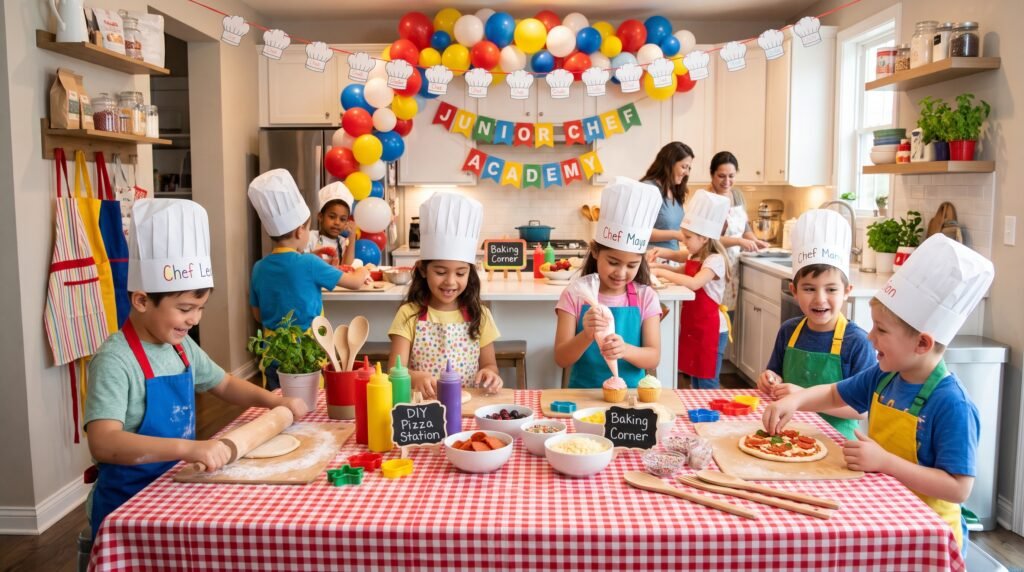
You don’t need to transform the whole room. Focus on the serving table and the activity table, where guests will spend most of their time. Checkered tablecloths, food-themed balloons placed well away from cooking areas, and clear signs for the menu or each station create a kitchen-inspired look without crowding the workspace.
Chef hats and chef aprons can serve as costumes and practical supplies. Set them out as guests arrive, or make DIY chef hats a short arrival craft using simple materials. If you use paper or other craft supplies, keep them separate from food-preparation surfaces and have guests wash their hands before cooking.
For a chef theme party in a small home, use signs to guide guests between the activity and serving areas rather than adding extra décor. Avoid fragile decorations, loose items near food, or anything that blocks access to sinks and exits. A few coordinated touches are enough to make the space feel intentional while keeping it easy to clean and safe to move through.
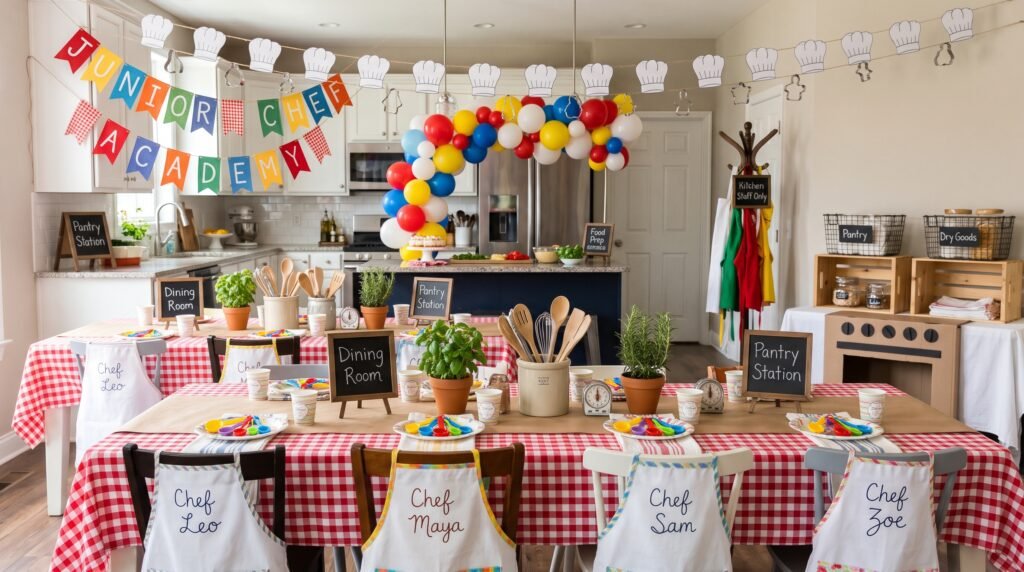
Junior Chef Decorations
- Personalized apron chair backs: Drape a simple white fabric apron over the back of each dining chair with each child’s name written across the front.
- Red-and-white gingham tablecloths: Roll out classic checkered runners or wipeable tablecloths to instantly establish a friendly Italian bistro vibe.
- Wooden spoon bouquet centerpieces: Place bundles of inexpensive wooden spoons, spatulas, and whisks upright in clean ceramic crocks or wide-mouth mason jars.
- Mini chalkboard menu easels: Prop small chalkboards on food tables displaying handwritten course titles like “Appetizer Station” and “Pastry Department.”
- Paper chef hat garland: Thread classic pleated paper chef hats along red baker’s twine and hang them across the entryway or mantle.
- Cookie cutter mobile: Tie assorted metal cookie cutters to varying lengths of fishing line or ribbon and hang them above the main prep island.
- Rolling pin table runners: Arrange wooden rolling pins end-to-end down the center of long tables as rustic floral and utensil anchors.
- Fresh herb pot accents: Place small terra-cotta pots of fragrant basil, mint, and rosemary along the tables for a burst of green and wonderful aroma.
- Butcher paper table coverings: Cover food preparation tables in brown kraft paper so young cooks can scribble notes, draw recipes, and create mess without stress.
- Hanging whisk balloon weights: Anchor bright red, yellow, and white balloon bunches to heavy metal whisks set in the center of food tables.
- Measuring spoon napkin rings: Loop sets of colorful plastic measuring spoons around cloth napkins using rustic jute twine.
- Tiered cooling rack displays: Stack wire baking cooling racks over canned goods or small blocks to create elevated platforms for cupcakes and snacks.
- Cardboard box “oven” photo prop: Paint a large moving box silver with black burner rings on top and an opening door for adorable baking photo ops.
- Colander fruit bowls: Rinse and serve whole apples, oranges, and bananas inside vintage enamel or stainless steel colanders.
- Vintage kitchen timer centerpieces: Scatter wind-up mechanical bell timers set to different intervals along the buffet runner.
- Dish towel placemats: Lay down striped flour-sack kitchen dish towels as absorbent, washable placemats at every child’s seat.
- Recipe card bunting: Clothespin vintage-style illustrated recipe cards to twine across food stations to label ingredients.
- “Order Up!” service bell: Keep a chrome desk-style call bell on the counter for guests to ring whenever fresh treats are served.
- Glass spice jar flower vases: Repurpose clean, label-free spice bottles as tiny bud vases holding single daisies or baby’s breath.
- Pastry box window display: Stack bakery-style pink and white pastry boxes with clear cellophane windows beside the favor table.
- Chalkboard “Executive Chef” entry sign: Welcome guests at the front door with a chalkboard sign reading “Welcome to Chef [Name]’s Test Kitchen.”
- Oven mitt utensil holders: Tuck sets of forks, spoons, and napkins inside bright silicone or cotton oven mitts on the buffet.
- Mini cast-iron spoon rests: Use small 3-inch cast-iron skillets to hold serving spoons, dip cups, or toothpicks.
- Hanging apron coat rack: Set up a low coat tree or wall hooks near the entrance labeled “Kitchen Staff Only” for guests to grab their gear.
- Striped paper straws in measuring cups: Place paper straws inside 2-cup Pyrex glass measuring cups on the drink station.
- Produce crate risers: Turn wooden farm crates upside down on the main table to add height and a farmer’s market aesthetic.
- Kitchen utensil door wreath: Wire together wooden spoons, cookie cutters, and silicone spatulas in a circular wreath for the front door.
- Mason jar flour and sugar risers: Fill large glass storage canisters with white sugar, flour, and colorful sprinkles to serve as decorative backdrop props.
- Bistro chalkboard wall decal: Place a peel-and-stick chalkboard decal on an open wall with “Daily Specials” listed for the party agenda.
- Clear glass cloche domes: Cover a few signature treats with glass or acrylic dessert cloches to give the buffet an upscale patisserie look.
- Inflatable chef props: Float oversized inflatable pizza slices or donut balloons around the room to keep the atmosphere playful.
- Striped awning table topper: Fashion a simple scalloped red-and-white awning out of poster board or striped fabric above the dessert table.
- Baker’s twine spool accents: Set out large spools of red, green, and blue baker’s twine as rustic decorative paperweights.
- “Pantry” supply bins: Organize paper goods and extra napkins in wire wire baskets labeled “Dry Goods” and “Pantry.”
- Personalized cutting board place cards: Write each guest’s name on a small, inexpensive craft-wood cutting board set at their seat.
Prepare the supplies, stations, and take-home materials
Make each station self-contained: put its tools, measured ingredients, and short instructions together before guests arrive. This cuts down on waiting and repeated questions, and helps guests understand what to do without needing the host beside them at every step. Set out only what the activity requires; extra tools and ingredients take up space and can make a simple task feel chaotic.
A compact supply checklist for a chef theme party can include:
- Kitchen utensils: mixing bowls, rolling pins, measuring cups, wooden spoons, and spatulas.
- Activity materials: prepared dough or bases, toppings, decorating supplies, and serving plates.
- Station basics: recipe cards, ingredient labels, handwashing supplies, and clean cloths or paper towels.
- Take-home items: recipe cards or activity sheets, plus bags or containers if guests will bring food home.
Personalized aprons can be a welcome gift or keepsake, but they’re optional. A lower-cost alternative is to decorate plain aprons at the party, provided you keep craft materials away from food and allow time for the activity. Another simple option is to provide reusable aprons without personalization.
Prepare printable recipes, menus, invitations, and take-home activity sheets ahead of time. Print a recipe card for each station with brief steps and any relevant ingredient information. Label the supplies and place the matching card with each activity. For a chef theme party, this small bit of preparation can prevent last-minute searching and let you spend more time welcoming guests.
Choose cooking activities for the guests’ ages
For most groups, choose one main food-making activity and one optional decorating or craft station. That gives guests a clear focus and a second option without requiring you to manage several recipes at once. A chef theme party activity should suit the guests’ ages, attention spans, kitchen experience, and comfort with food preparation.
Toddlers: Keep tasks short and closely supervised. They might stir a mixture, add toppings to a prepared food, or decorate with larger, easy-to-handle items. Avoid tasks involving heat, sharp tools, or small pieces that may pose a choking risk. Have an adult stationed beside the toddlers rather than supervising from across the room.
Older children: With an adult overseeing the station, children may measure ingredients, roll dough, or assemble individual portions. Demonstrate the task first, explain which tools they may use, and let them complete one step at a time. A pizza-making station or simple dough activity gives each child a defined job without putting the whole recipe in their hands.
Adults: Choose a collaborative recipe, a friendly decorating challenge, or a build-your-own food station suited to the group. If guests have different cooking skills, offer tasks with different levels of involvement—one person can portion ingredients while another assembles or decorates.
Cupcake decorating and cookie decorating are flexible choices at almost any age when you prepare the bases in advance. Guests can focus on arranging toppings rather than waiting for something to bake. In a chef theme party, adapt the time and complexity to the group: younger guests usually benefit from a quick task, while older children and adults may enjoy a longer activity with more steps.
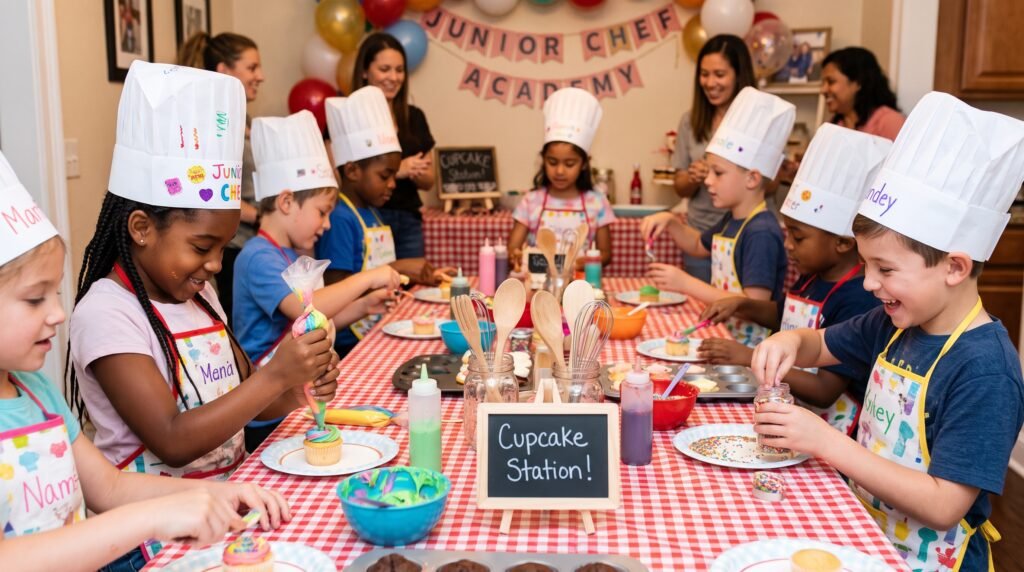
Junior Chef Activities & Games
Toddlers and Preschoolers
- Cookie cutter playdough studio: Mix up a batch of homemade cinnamon-scented playdough and let little hands roll, squish, and stamp out shapes using colorful plastic cookie cutters.
- Pasta necklace threading: Set out vibrant food-dyed rigatoni and penne tubes for little ones to string onto yarn tipped with tape for an easy fine-motor craft.
- Pancake flipping practice: Cut round circles out of brown craft felt and let children practice scooping and flipping their “flapjacks” in cool, lightweight frying pans.
- Pretend restaurant role-play: Provide mini aprons, play food, plastic trays, and order pads so younger guests can play server, chef, and diner at their own pace.
- Pin the toque on the chef: Play a sweet kitchen-themed variation of the classic party game using a poster of a friendly baker and paper chef hats backed with double-sided tape.
- Baking soda & vinegar erupting cauldrons: Set mini saucepans on trays with spoonfuls of baking soda, then hand out plastic droppers of colored vinegar to create magical fizzy kitchen chemistry.
- Musical kitchen timers: Pass around a ticking mechanical kitchen timer like a hot potato to upbeat music—whoever is holding it when the bell dings gets to do a silly chef dance.
- Kitchen obstacle course: Set up stepping-stone floor mats, a cardboard box “oven” tunnel to crawl through, and a wooden spoon balance walk.
- Chef hat customization: Provide plain white paper chef hats along with foam stickers, food-themed stampers, and washable crayons for an easy, no-glue uniform craft.
- Junior chef photo booth: Keep a dress-up crate stocked with oversized wooden spoons, mini rolling pins, felt chef mustaches, and chalkboard signs for fun candid photos.
Early Elementary
- Fabric-painted apron craft: Set out blank cotton aprons, fabric markers, and shaped sponge stamps so every child can design their own official cooking uniform to take home.
- The Spatula & Egg relay: Have kids balance a plastic toy egg on a kitchen spatula while navigating a simple winding course across the room without dropping it.
- Butter in a jar science experiment: Pour heavy whipping cream into small tightly sealed jars and let the kids shake them vigorously to watch liquid cream magically turn into spreadable butter.
- Recipe card scavenger hunt: Hide illustrated ingredient cards around the party space that kids must track down to piece together a secret party punch recipe.
- Cupcake decorating showdown: Hand each child an unfrosted cupcake, piping bags of sweet frosting, and cups of sprinkles, awarding fun ribbons like “Most Colorful” and “Sky-High Swirl.”
- Pizza dough toss: Hand out small, manageable rounds of soft pizza dough and teach everyone how to gently stretch, knead, and toss them into the air.
- Oven mitt relay: Team up players to race across the room, slip on two bulky quilted oven mitts, unwrap a piece of foil-wrapped chocolate candy, and pass the mitts to the next teammate.
- Table setting speed race: Scramble sets of plates, napkins, forks, knives, and spoons in a basket and time how quickly each kid can arrange a proper bistro table setting.
- Herb garden planting: Let guests fill small peat pots with potting soil, plant sweet basil or mint seeds, and decorate wooden craft stick plant markers.
- Kitchen utensil bingo: Hand out custom bingo cards filled with pictures of whisks, colanders, rolling pins, and graters, using dry kidney beans as board markers.
- “Order Up!” memory match: Call out an order ticket like “Two cheese pizzas, one strawberry lemonade, and a chocolate donut!” to see who can repeat the ticket back accurately.
- Personalized wooden spoon craft: Supply plain wooden mixing spoons, ribbons, and non-toxic paint pens so children can turn their spoons into adorable kitchen characters or decorative keepsakes.
- Cookie box decorating: Set out plain white bakery boxes with stickers, bakers twine, and stamps so kids can customize their pastry boxes to carry treats home.
- Junior Chef graduation ceremony: Queue up upbeat celebration music and present each child with a personalized “Certified Junior Chef” certificate to celebrate their kitchen accomplishments.
Tweens and Older Kids
- Blindfolded taste test challenge: Blindfold adventurous chefs and have them sample familiar bites—like white cheddar, honey, dark chocolate, and watermelon—to identify each item by taste alone.
- Mystery box cooking challenge: Place a few compatible, no-cook ingredients inside a closed box (such as flatbreads, cream cheese, berries, and honey) and give teams ten minutes to plate an original creation.
- Laminated piping practice: Provide piping bags fitted with star and round tips alongside laminated sheets with printed guidelines so guests can practice professional borders and rosettes.
- Fondant modeling clay challenge: Hand out small balls of colored edible fondant and challenge guests to sculpt mini fruits, vegetables, or miniature dishes to garnish desserts.
- Fruit and melon sculpting: Provide melon ballers, crinkle cutters, and kid-safe food prep knives for carving elaborate geometric fruit skewers and melon bowls.
- Dip-and-score salsa judging: Set out three different mild homemade salsas (like peach mango, roasted corn, and classic mild tomato) with printed clipboards for guests to rate taste, texture, and aroma.
- Scent detective jars: Place cotton rounds dabbed with real extracts—almond, lemon, peppermint, vanilla, and coconut—inside covered jars to test everyone’s sensory deduction skills.
- Kitchen tool charades: Write classic kitchen actions like whisking batter, rolling dough, flipping pancakes, and chopping onions on cards for silent group charades.
- Giant kitchen word search: Hang an oversized kraft paper poster on the wall filled with hidden culinary vocabulary like sauté, simmer, julienne, fold, and caramelize.
- “Name That Herb” smell station: Place fresh sprigs of rosemary, sage, cilantro, and mint in opaque cups with perforated foil tops to see who can identify fresh herbs by aroma.
- Layered jar mix favor station: Set out wide-mouth glass jars and dry goods like cocoa powder, brown sugar, oats, and chocolate chips for guests to assemble their own measure-and-pour brownie jars.
Plan a party menu that is enjoyable and manageable
Choose party food that can be prepared ahead, served in portions, and adjusted for guests’ dietary needs. The main activity doesn’t have to provide every meal component. Pair one hands-on dish with ready-to-serve food, drinks, and a dessert plan so guests can eat even if the activity takes longer than expected.
A pizza-making station is a practical centerpiece. Set out prepared dough or ready-made bases, arrange toppings in clearly identified containers, and let guests assemble individual portions. An adult should manage the oven and any hot trays. If space or timing is tight, prepare pizzas ahead and make topping or finishing them the activity instead.
For dessert, choose one approach rather than trying to offer everything. You could make cupcake decorating or cookie decorating the activity, serve chef-themed cupcakes that are ready to eat, or have a birthday cake as the main dessert. A chef theme party doesn’t need all of these options; select what fits the schedule, the group, and your capacity to prepare.
Keep the menu simple enough to explain at a glance. Put a printed menu near the food so guests and caregivers can see what’s being served and check ingredient labels. Include drinks and any ready-to-serve sides in your planning, not just the cooking project. This gives people something to enjoy while they wait and helps the host avoid having to prepare a second meal during the activity.
Before buying ingredients, confirm allergies and dietary restrictions with caregivers or guests. Then decide whether you can make a suitable alternative without creating cross-contact concerns. Menu planning works best when you choose the activity and the food together, rather than building an elaborate menu and trying to fit an activity around it.
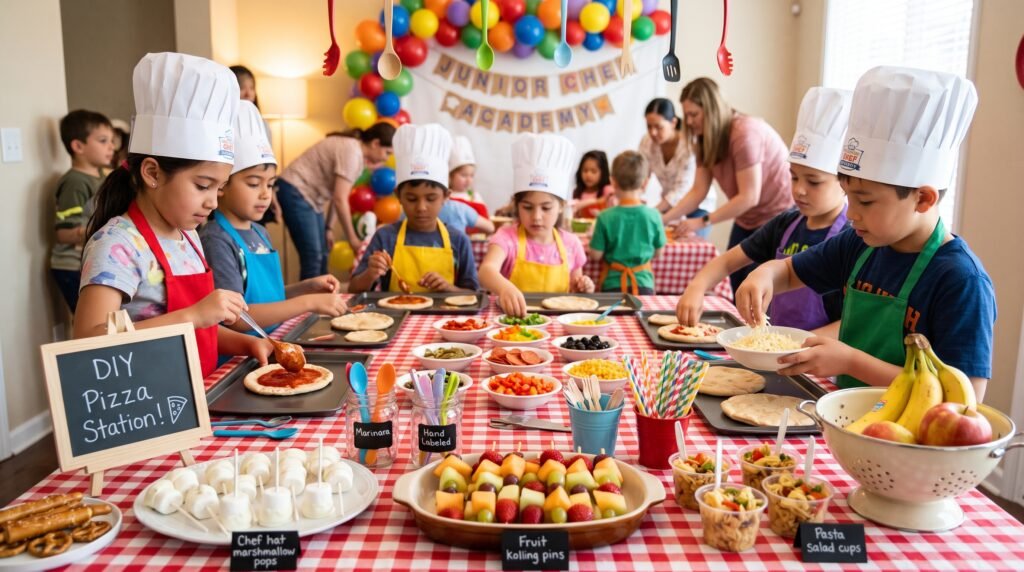
Junior Chef Menu & Snacks
- Personal pita pizza bar: Set out mini pita rounds, bowls of warm marinara, shredded mozzarella, and sliced toppings for kids to assemble themselves.
- Chef hat marshmallow pops: Skewer large campfire marshmallows on cake pop sticks, dip the bases in white chocolate, and top with mini marshmallows to mimic a chef’s toque.
- Fruit kabob skewers: Thread melon balls, strawberries, pineapple chunks, and grapes onto blunt bamboo sticks with honey-lime yogurt dip.
- Pretzel rolling pins: Attach mini white marshmallows to both ends of pretzel rods and dip them in light caramel or white candy melts.
- Individual pasta salad cups: Layer rotini, cherry tomato halves, cucumber slices, and mozzarella pearls inside clear plastic cups with small forks.
- Sugar cookie artist palettes: Bake palette-shaped sugar cookies and pipe five colorful dots of buttercream “paint” along the edge with a clean paintbrush.
- Veggie garden dip pots: Spoon ranch or hummus into clear plastic cups and insert baby carrots, celery sticks, and bell pepper strips to resemble a garden.
- Mason jar fruit parfaits: Let kids layer vanilla Greek yogurt, mixed berries, and crunchy granola into small wide-mouth plastic jars.
- Mini brioche sliders: Serve kid-sized beef, turkey, or cheese sliders fastened with decorative bamboo sandwich picks.
- Breadstick utensil bundles: Wrap three crispy Italian breadsticks together with a ribbon of sliced prosciutto or fruit leather.
- Cookie dough dessert dip: Whip cream cheese, butter, brown sugar, and mini chocolate chips into a safe, flourless dip served with animal crackers.
- Crispy rice sushi rolls: Flatten puffed rice treat mixture, roll it around gummy worms or fruit strips, and slice into bite-sized “sushi” wheels.
- Grilled cheese triangles with tomato soup shooters: Pour warm tomato soup into 2-ounce paper cups and balance a mini grilled cheese triangle on the rim.
- Fruit juice tasting flights: Pour apple, cranberry, and orange juices into a flight of three small cups for kids to sample and review like culinary judges.
- Pancake pop skewers: Stack silver-dollar pancakes between fresh banana and strawberry slices on wooden skewers, served with maple syrup for dipping.
- Savory pinwheel roll-ups: Roll cream cheese, cheddar, and sliced turkey inside spinach tortillas, then slice into colorful sandwich spirals.
- Caprese caterpillar skewers: Thread cherry tomatoes, basil leaves, and mozzarella pearls onto toothpicks with tiny balsamic drizzle dots for eyes.
- Popcorn shaker cups: Hand out plain buttered popcorn in paper cups alongside shaker jars of cinnamon sugar, ranch powder, and parmesan cheese.
- Watermelon popsicle wedges: Insert wooden craft sticks into the rind of thick watermelon triangles for mess-free snacking.
- Chocolate dipped stirring spoons: Dip wooden or plastic spoons in melted chocolate and sprinkles so kids can stir them into warm milk.
- Mini taco boats: Fill mini stand-and-stuff tortilla boats with seasoned meat or beans and let kids top them with cheese, salsa, and mild guacamole.
- Cucumber cream cheese ribbons: Use a vegetable peeler to shave cucumbers into thin ribbons, rolled up with seasoned cream cheese on rye crackers.
- Meatball slider bites: Spear mini baked meatballs and melted provolone between halved dinner rolls with a marinara dipping bowl.
- Apple slice “donuts”: Core and slice apples horizontally into rings, then spread with sunflower seed butter and top with rainbow sprinkles.
- Warm pretzel bites: Serve soft pretzel bites in brown paper bags alongside warm mild cheddar cheese sauce.
- Kitchen punch bowl: Mix equal parts ginger ale, white grape juice, and lemonade garnished with floating lemon and strawberry slices.
- Strawberry shortcake cups: Layer angel food cake cubes, fresh sliced strawberries, and whipped cream inside clear tumblers.
- Mini waffle skewers: Alternate toasted mini waffles with fresh blackberries and sausage bites on wooden skewers.
- Edible chef hat cupcakes: Top vanilla-frosted cupcakes with a large marshmallow wrapped in a ruffled collar of white fondant.
- Chocolate fondue station: Offer a warm slow-cooker chocolate dip surrounded by banana coins, pretzel twists, and graham cracker sticks.
- DIY trail mix market: Set out bowls of toasted oat cereal, dried cranberries, banana chips, pumpkin seeds, and chocolate gems for custom trail mixes.
- Mini chicken tenders in fry cones: Serve two crisp chicken tenders inside parchment paper cones with honey mustard dipping sauce.
- Cheesy polenta bites: Cool cooked polenta, slice into squares, pan-fry until golden, and top with warm marinara and parmesan.
- Banana sushi bites: Spread nut-free sunflower butter over a whole peeled banana, roll in crispy rice cereal, and slice into wheels.
- Cinnamon sugar pastry twists: Twist strips of store-bought puff pastry in cinnamon sugar, bake until golden, and serve alongside sweet icing dip.
Keep cooking activities safe and welcoming for everyone
Adults should handle knives, hot surfaces, ovens, and appliances. Give children tasks suited to their age and abilities, explain the boundaries before the activity starts, and keep an adult responsible for supervision throughout. At a chef theme party, clear roles help guests participate while keeping higher-risk steps with an adult.
For toddlers, place the station well away from hot equipment and remove small items that could pose a choking risk. Assign an adult to stay close and supervise directly. For older children, show them how to handle approved tools, wash their hands, and work on a clean surface. Make it clear that they must ask an adult before using any equipment, even if they’ve used it at home.
Ask caregivers about food allergies and dietary restrictions before finalizing the menu. Label ingredients clearly and identify any suitable alternatives so guests know what they can choose. Keep separate preparation areas, clean hands and utensils between foods, and don’t share serving tools between dishes. These steps help reduce cross-contamination, but ask the caregiver what precautions are needed for a particular allergy rather than assuming one setup works for everyone.
Small spaces don’t rule out a cooking activity. Use a tabletop cupcake or cookie decorating station, limit the number of guests working at once, or assemble ready-to-eat foods without using an oven. You can also move a suitable activity outdoors, such as decorating or assembling food, if you can keep ingredients clean and supervised. The chef theme party should fit the space you have; don’t create a crowded kitchen simply to make the activity feel more elaborate.
Use a realistic timeline, setup checklist, and budget
Plan in this order: confirm guests and dietary needs, choose the activity and menu, prepare printables and shop, then set up stations before arrival. This sequence helps you avoid buying ingredients before knowing what guests can eat or preparing decorations for an activity you later change.
Keep the chef theme party timeline realistic
Before party day, finalize the guest list and ask about allergies or dietary restrictions. Next, choose one main activity and decide what food will be served alongside it. Prepare recipe cards, menus, invitations, and take-home sheets; gather tools and nonperishable supplies; then shop for ingredients closer to the event as appropriate for the food you’ve chosen.
On party day, clean the work surfaces and organize the stations before guests arrive. Welcome guests with chef hats or aprons, then explain the activity and safety rules. Move from the main cooking activity to food and cake, and leave a calm wrap-up for collecting take-home items and saying goodbye. Allow enough flexibility for handwashing, waiting turns, and cleaning spills instead of filling every moment with a scheduled task.
Use this setup checklist: clean surfaces; activity supplies and tools; labeled ingredients; serving plates and utensils; decorations and signs; and a designated area for finished food. Keep the finished-food area separate from active preparation where possible. For a chef theme party, a clear sequence and fewer stations often make the day more relaxed for you as well as for your guests.
Break your budget into categories before spending: food and ingredients; reusable or borrowed kitchen tools; decorations; clothing or aprons; printables; and party favors. You don’t need a fixed amount for each category. Instead, decide which elements matter most, check what you already own, and borrow suitable tools before purchasing duplicates.
To simplify, use household utensils, limit the event to one main activity, and pick one dessert approach. Printable invitations, menus, and recipe cards can reduce the need for extra stationery, while homemade signs or DIY chef hats can replace some purchased décor. A chef theme party can still feel festive when you spend attention on a well-prepared activity rather than on having more stations or supplies.
Send guests home with a small chef-inspired favor
Choose one useful favor that connects to what guests did. A recipe card, take-home activity sheet, decorated chef hat, or small portion of a safely packed party creation can all work. You don’t need a bag of unrelated items; a single reminder of the activity is easier to prepare and more likely to feel thoughtful.
Assemble favors before party day and place them together in a clearly marked spot. If you’re sending food home, use suitable containers and label the item and its ingredients, especially when allergies or dietary restrictions may matter. Don’t assume that a guest who could eat something at the party can safely take it home without knowing what went into it.
For a chef theme party centered on pizza, for example, you could send home a printed recipe card rather than leftover food. If guests decorated cookies, a take-home activity sheet or a decorated chef hat may be simpler than packing baked goods. Pick the option that fits the activity and your food-safety plan, and avoid making favor preparation another complicated project.
Your next steps are straightforward: choose an age-appropriate activity, confirm dietary needs, write a short menu, gather the supplies, and follow a realistic timeline. Prepare the stations in advance and keep the number of activities manageable. With those decisions made, your chef theme party can be enjoyable for guests without requiring you to spend the whole celebration managing the kitchen.
Key Takeaways
- Choose one main cooking activity and, if useful, one optional decorating or craft station.
- Prepare station supplies, recipe cards, ingredient labels, and printables before guests arrive.
- Confirm allergies and dietary needs early, and keep adults responsible for knives, heat, and appliances.
- Use a realistic party-day sequence and simplify the budget with household tools, fewer activities, and one dessert plan.
- Pick one simple favor connected to the activity so guests can take home a small reminder without adding host workload.
Frequently Asked Questions
What can you do at a cooking party?
Choose one main food-making activity, such as assembling individual pizzas, and optionally add a decorating or craft station. Match the task to the guests’ ages and keep the ingredients and instructions ready before they arrive.
What are good cooking party activities for toddlers?
Offer brief, closely supervised tasks such as stirring or adding toppings to prepared foods. Keep toddlers away from hot equipment, sharp tools, and small items that could pose a choking risk.
How do you make a chef theme party manageable in a small space?
Use one tabletop decorating or assembly station, set out only the tools guests need, and keep the serving area separate from the active work area where possible. A no-cook activity can avoid crowding around appliances.
What food should you serve at a chef-themed party?
Choose food that can be prepared ahead and served in portions, such as ready-to-serve sides paired with a pizza-making activity. For dessert, select one option—cupcake decorating, cookie decorating, chef-themed cupcakes, or a birthday cake—instead of trying to provide them all.
How can you handle food allergies at a cooking party?
Ask guests or caregivers about allergies and dietary restrictions before finalizing the menu, then label ingredients and identify suitable alternatives. Use clean hands and utensils, separate preparation areas where needed, and separate serving tools to reduce cross-contamination.
What should guests wear to a chef theme party?
Tell guests in the invitation whether you’ll provide chef hats and aprons or expect them to bring their own. Recommend comfortable clothes that can handle a little mess, and keep safety and ease of movement in mind.